ISSN (Online): 3117-3926
ISSN (Print): 3117-535X
| Publication Fees: |  |

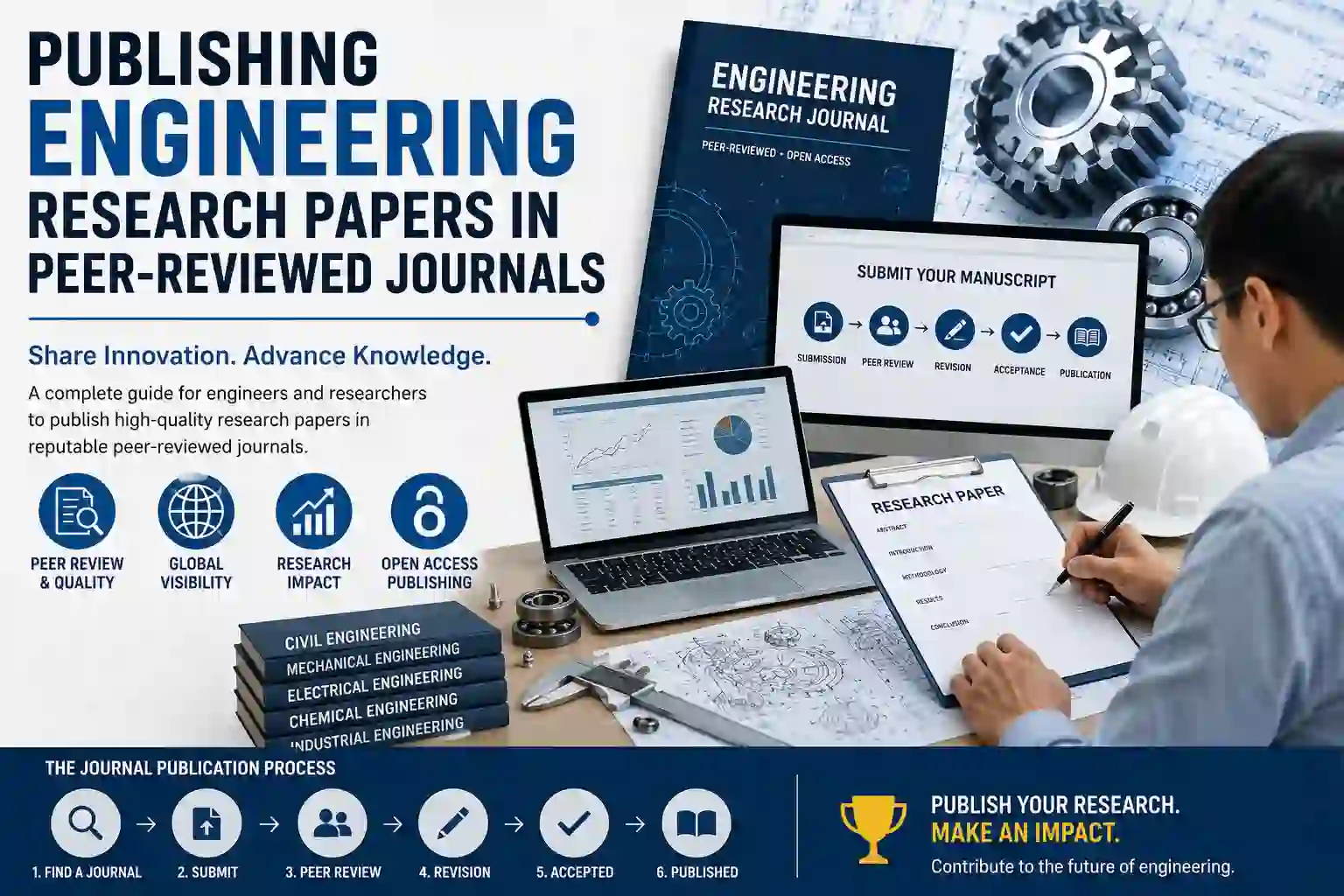
Engineering research drives innovation across industries, from infrastructure and manufacturing to artificial intelligence and sustainable energy. However, conducting impactful research is only part of the academic journey. Equally important is publishing engineering research papers in reputable peer-reviewed journals where findings can contribute to scientific advancement and practical applications.
Whether you are a graduate student, doctoral researcher, faculty member, or industry professional, understanding the publication process can significantly improve your chances of acceptance and maximize the visibility of your work. This guide explains the essential steps involved in publishing engineering research papers while helping authors navigate the increasingly competitive world of scholarly publishing.
Peer review serves as a quality assurance mechanism in academic publishing. Before publication, submitted manuscripts undergo evaluation by independent experts who assess originality, methodology, technical accuracy, and overall contribution to the field.
Publishing in peer-reviewed journals offers several advantages:
For engineering researchers, peer-reviewed publication is often considered a benchmark of scholarly excellence.
Engineering journals continue to seek innovative contributions in emerging and interdisciplinary fields. Some of the most active research areas include:
Researchers working within these disciplines often encounter strong publication opportunities due to growing global interest and industrial relevance.
One of the most critical decisions in the publication process is selecting an appropriate journal. A mismatch between your manuscript and the journal's scope is among the most common reasons for rejection.
Review the aims and scope carefully to ensure your research aligns with the journal's focus areas.
A strong editorial board and transparent peer-review process often indicate a journal's commitment to quality.
Many authors now prefer open-access journals because they increase global visibility and accessibility.
Examining recent publications helps determine whether your research fits the journal's audience and expectations.
Researchers seeking publication opportunities across engineering and applied sciences can explore JRIST, an international multidisciplinary research journal that welcomes innovative scientific contributions.
Even groundbreaking research can face rejection if the manuscript lacks clarity, structure, or technical rigor. Successful papers typically follow a logical and well-organized format.
Create a concise and descriptive title that accurately reflects the research contribution.
Summarize objectives, methodology, results, and significance within a limited word count.
Clearly identify the research problem, objectives, and relevance of the study.
Provide detailed explanations of experimental procedures, simulations, datasets, and analytical techniques.
Present findings objectively and discuss their implications in relation to existing literature.
Highlight major contributions and suggest future research directions.
Understanding common rejection factors can help researchers avoid costly mistakes.
Many rejections can be prevented through careful preparation and adherence to journal guidelines.
After submission, most journals follow a structured review process:
Authors should view reviewer feedback as an opportunity to strengthen their research rather than as criticism.
Open-access publishing has become increasingly important in engineering research. By removing subscription barriers, open-access journals allow researchers, policymakers, industry professionals, and students worldwide to access published findings.
Benefits include:
Modern engineering challenges often require collaboration across multiple disciplines. For example, artificial intelligence may intersect with civil engineering, environmental science, healthcare, or manufacturing.
Researchers interested in technology-focused publishing may also find value in our related article:
Top Computer Science Journal Options for Publishing Research in 2026
Interdisciplinary research frequently attracts broader audiences and generates higher research impact.
Researchers seeking opportunities to publish engineering research papers can monitor current submission announcements and special issues through the journal's official Call for Papers page.
Regularly reviewing open calls helps researchers identify publication opportunities that align with their expertise and ongoing projects.
The academic publishing landscape continues to evolve through digital transformation and open science initiatives. Emerging trends include:
Engineering researchers who embrace these developments will be well-positioned to maximize the reach and influence of their work.
Publishing engineering research papers in peer-reviewed journals remains one of the most effective ways to contribute to scientific progress and professional development. By selecting appropriate journals, preparing high-quality manuscripts, and engaging constructively with the peer-review process, researchers can significantly improve their publication outcomes.
As engineering challenges become increasingly complex and interdisciplinary, scholarly publishing will continue to play a vital role in advancing innovation, collaboration, and technological progress. Investing time in understanding the publication process today can create lasting benefits for both researchers and the broader scientific community.
Useful Resources:
ISSN (Online): 3117-3926
ISSN (Print): 3117-535X
| Publication Fees: | |