ISSN (Online): 3117-3926
ISSN (Print): 3117-535X
| Publication Fees: |  |

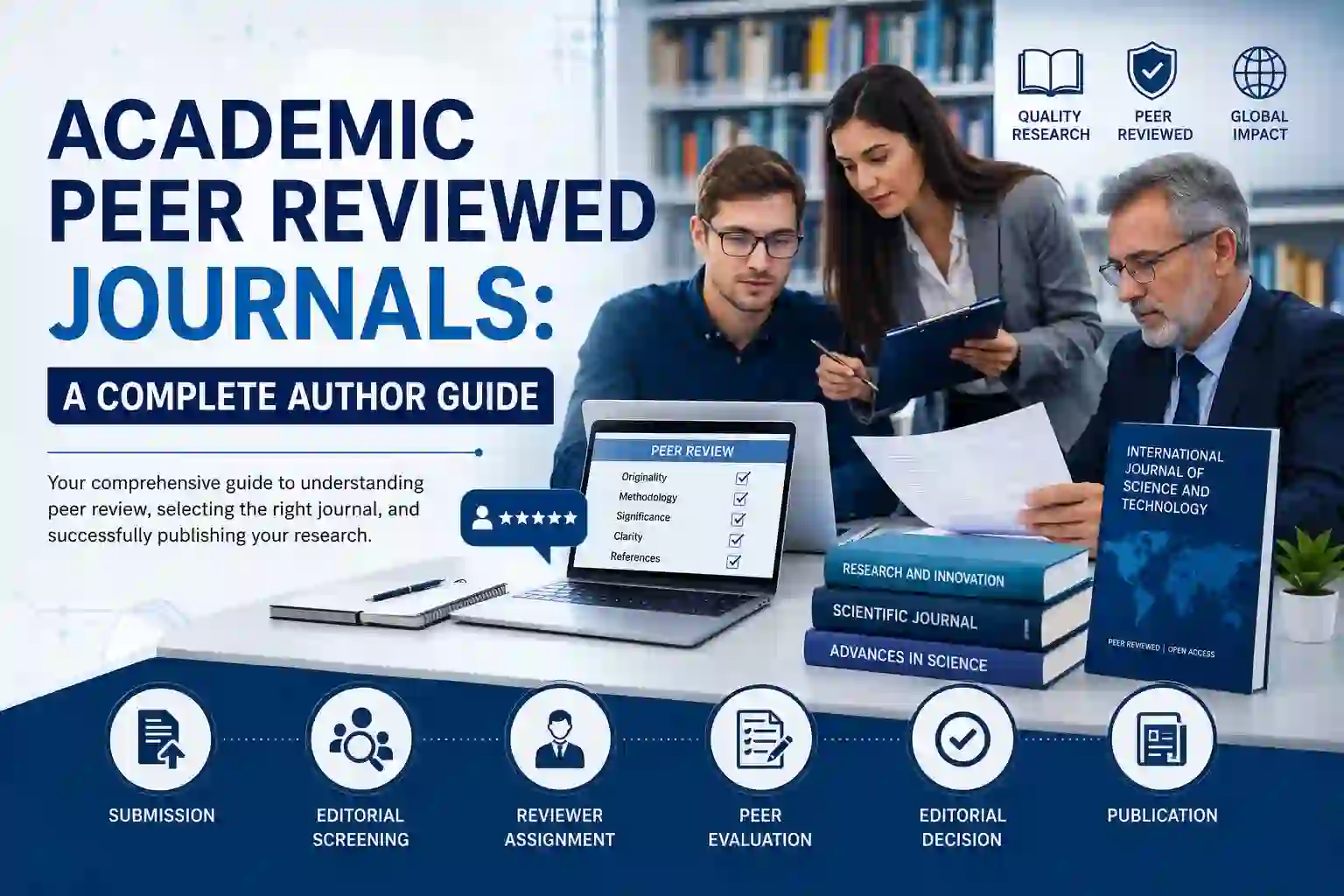
Publishing research in academic peer reviewed journals is one of the most effective ways to share scientific discoveries, establish academic credibility, and contribute to global knowledge. Whether you are a first-time researcher, graduate student, faculty member, or industry professional, understanding how peer-reviewed journals operate can significantly improve your chances of publication success.
This comprehensive guide explains what academic peer-reviewed journals are, how the peer-review process works, how to select the right journal, and practical strategies to increase your publication success rate.
Academic peer-reviewed journals are scholarly publications that evaluate submitted manuscripts through an independent review process conducted by experts in the same field. Before publication, research articles undergo rigorous scrutiny to ensure originality, methodological accuracy, significance, and scientific validity.
The peer-review system serves as a quality-control mechanism that helps maintain the integrity of academic literature while ensuring that published findings meet established scholarly standards.
Publishing in reputable peer-reviewed journals offers several advantages:
Researchers seeking publication opportunities can explore journals such as JRIST, which promotes interdisciplinary research and innovation across multiple scientific domains.
The peer review process typically follows several stages:
Authors submit their manuscripts through the journal's online submission system while following specific formatting and ethical guidelines.
The editor evaluates the manuscript's relevance, originality, scope alignment, and compliance with journal policies.
Qualified subject experts are invited to assess the manuscript independently.
Reviewers analyze:
The editor may decide to:
After successful revisions and final approval, the article proceeds to publication.
Reviewers know the authors' identities, but authors do not know the reviewers.
Neither authors nor reviewers know each other's identities, reducing potential bias.
Both authors and reviewers are identified, promoting transparency and accountability.
Most reputable journals adopt double-blind review because it helps maintain objectivity throughout the evaluation process.
Before submitting your manuscript, evaluate whether a journal demonstrates the following characteristics:
Researchers in engineering disciplines may find useful guidance in this article on publishing engineering research papers in peer-reviewed journals.
Choosing an appropriate journal significantly impacts publication success.
Ensure your research topic aligns closely with the journal's aims and objectives.
Analyze recent publications to determine whether your research fits the journal's audience.
Well-indexed journals provide broader exposure and greater citation opportunities.
Some journals publish articles faster than others. Review average review and publication times before submission.
Examine editorial quality, publication ethics, and scholarly impact.
Authors in computing disciplines can also explore top computer science journal options for publishing research in 2026.
Many research papers are rejected due to avoidable mistakes, including:
Careful preparation and adherence to journal guidelines can dramatically improve acceptance rates.
Every journal has specific submission requirements regarding formatting, references, figures, and supplementary materials.
Your abstract often determines whether reviewers and readers continue reading the manuscript.
A comprehensive literature review demonstrates awareness of current developments and identifies research gaps.
Ensure proper citation, avoid plagiarism, and obtain necessary approvals for human or animal studies.
Constructive responses to reviewer feedback often strengthen the manuscript and improve publication outcomes.
Modern researchers often choose between open-access and subscription-based journals.
| Feature | Open Access | Traditional Journals |
|---|---|---|
| Reader Access | Free | Subscription Required |
| Research Visibility | Higher | Moderate |
| Publication Fees | Often Applicable | May Be Lower |
| Citation Potential | Often Higher | Varies |
Many modern journals now offer open-access options to maximize research dissemination and accessibility.
Monitoring active calls for papers can help researchers identify suitable publication opportunities and special issues aligned with their expertise.
Authors looking for current submission opportunities can visit the JRIST Call for Papers page for upcoming publication announcements and submission deadlines.
Academic publishing continues to evolve through digital platforms, artificial intelligence-assisted editorial workflows, enhanced research transparency, open science initiatives, and global collaboration networks. Researchers who stay informed about these developments can adapt more effectively to changing publication standards and expectations.
Academic peer-reviewed journals remain the gold standard for scholarly communication. Understanding the peer-review process, selecting appropriate journals, following ethical publishing practices, and preparing high-quality manuscripts can significantly improve publication success.
Whether you are publishing your first article or expanding an established research portfolio, investing time in understanding the academic publishing ecosystem will help maximize the impact, visibility, and credibility of your research contributions.
For researchers seeking a multidisciplinary platform for scientific publication, visit Journal of Recent Innovation in Science and Technology (JRIST) to learn more about submission opportunities, publication guidelines, and current research initiatives.
ISSN (Online): 3117-3926
ISSN (Print): 3117-535X
| Publication Fees: | |