ISSN (Online): 3117-3926
ISSN (Print): 3117-535X
| Publication Fees: |  |

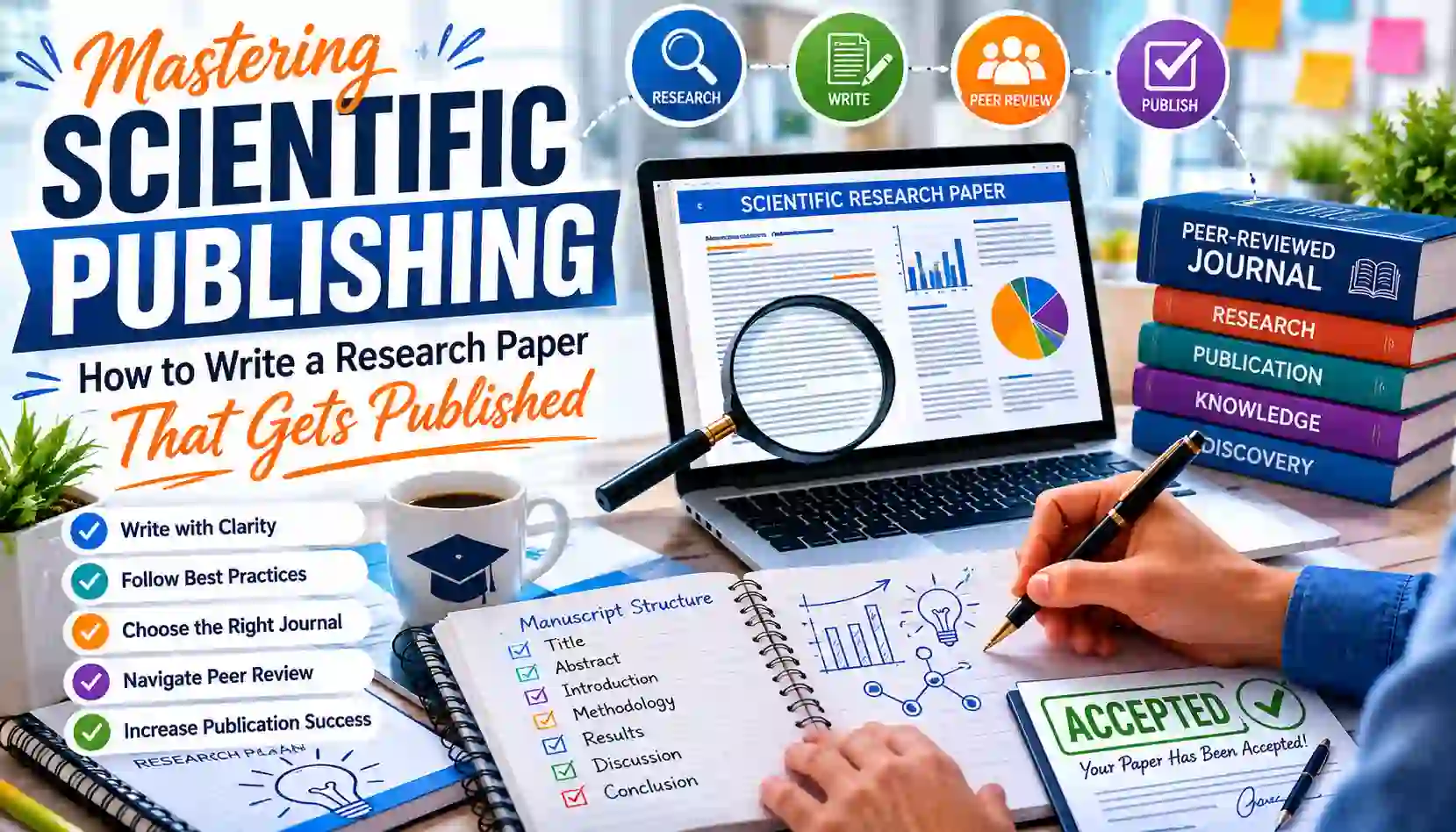
Publishing a research paper in a reputable peer-reviewed journal is a significant milestone for researchers, scholars, and academics. Beyond contributing to scientific knowledge, publication enhances professional credibility, supports career advancement, and increases the visibility of research findings. However, many promising manuscripts are rejected due to poor organization, inadequate methodology descriptions, or failure to meet journal requirements.
If you want to improve your chances of publication, understanding the complete scientific publishing process is essential. This guide explains how to write a research paper that gets published, from developing a strong research question to navigating peer review successfully.
Scientific publishing serves as the foundation of academic communication. It allows researchers to share discoveries, validate findings through peer review, and contribute to evidence-based knowledge.
Benefits of publishing include:
Researchers seeking publication opportunities can explore the latest Call for Papers to identify suitable submission opportunities.
The foundation of every publishable research paper is a clear, original, and relevant research question. Before beginning your study, evaluate whether your topic:
A well-defined research objective makes the writing process easier and increases the manuscript's value to journal editors and reviewers.
A literature review demonstrates your understanding of existing research and helps position your study within the broader academic conversation.
When reviewing literature:
Researchers interested in understanding journal expectations can benefit from reading this comprehensive guide on academic peer-reviewed journals.
Most scientific journals follow the IMRAD format:
Create a concise and informative title that includes important keywords while accurately reflecting the study's content.
The abstract should summarize:
Many editors read the abstract first, making it one of the most important sections of the paper.
The introduction should:
Clearly describe:
Transparency improves reproducibility and reviewer confidence.
Present findings objectively using:
Interpret findings, compare them with previous research, and explain their significance.
Summarize key contributions, practical implications, limitations, and future research directions.
Scientific writing should be:
Avoid overly complex sentences and ensure that every paragraph contributes directly to the study's objectives.
Choosing the appropriate journal is one of the most critical decisions in scientific publishing.
Consider the following:
Computer science researchers may find valuable insights in this guide to top computer science journals for publishing research in 2026.
Engineering researchers can also explore best practices for publishing engineering research papers in peer-reviewed journals.
Many manuscripts are rejected before peer review due to formatting errors.
Before submission, verify:
Always read and follow the journal's author guidelines carefully.
Peer review is an essential quality-control process that evaluates the scientific rigor of your work.
Reviewers typically assess:
Respond professionally to reviewer comments and provide detailed explanations for all revisions.
Understanding these common pitfalls can significantly improve publication success.
The publishing landscape continues to evolve through open-access publishing, digital dissemination, research transparency initiatives, and enhanced peer-review systems. Researchers who stay informed about publishing trends gain a competitive advantage in reaching wider audiences and maximizing research impact.
Organizations and journals increasingly emphasize transparency, data sharing, and research reproducibility, making quality writing and robust methodology more important than ever.
Mastering scientific publishing requires more than conducting excellent research. Success depends on selecting a meaningful topic, following a structured writing process, choosing the right journal, and responding effectively to peer review. By applying these best practices, researchers can significantly improve their chances of publishing in respected peer-reviewed journals and contributing valuable knowledge to their academic communities.
To learn more about publication opportunities, journal guidelines, and academic publishing resources, visit JRIST and explore the latest opportunities for researchers worldwide.
ISSN (Online): 3117-3926
ISSN (Print): 3117-535X
| Publication Fees: | |