ISSN (Online): 3117-3926
ISSN (Print): 3117-535X
| Publication Fees: |  |

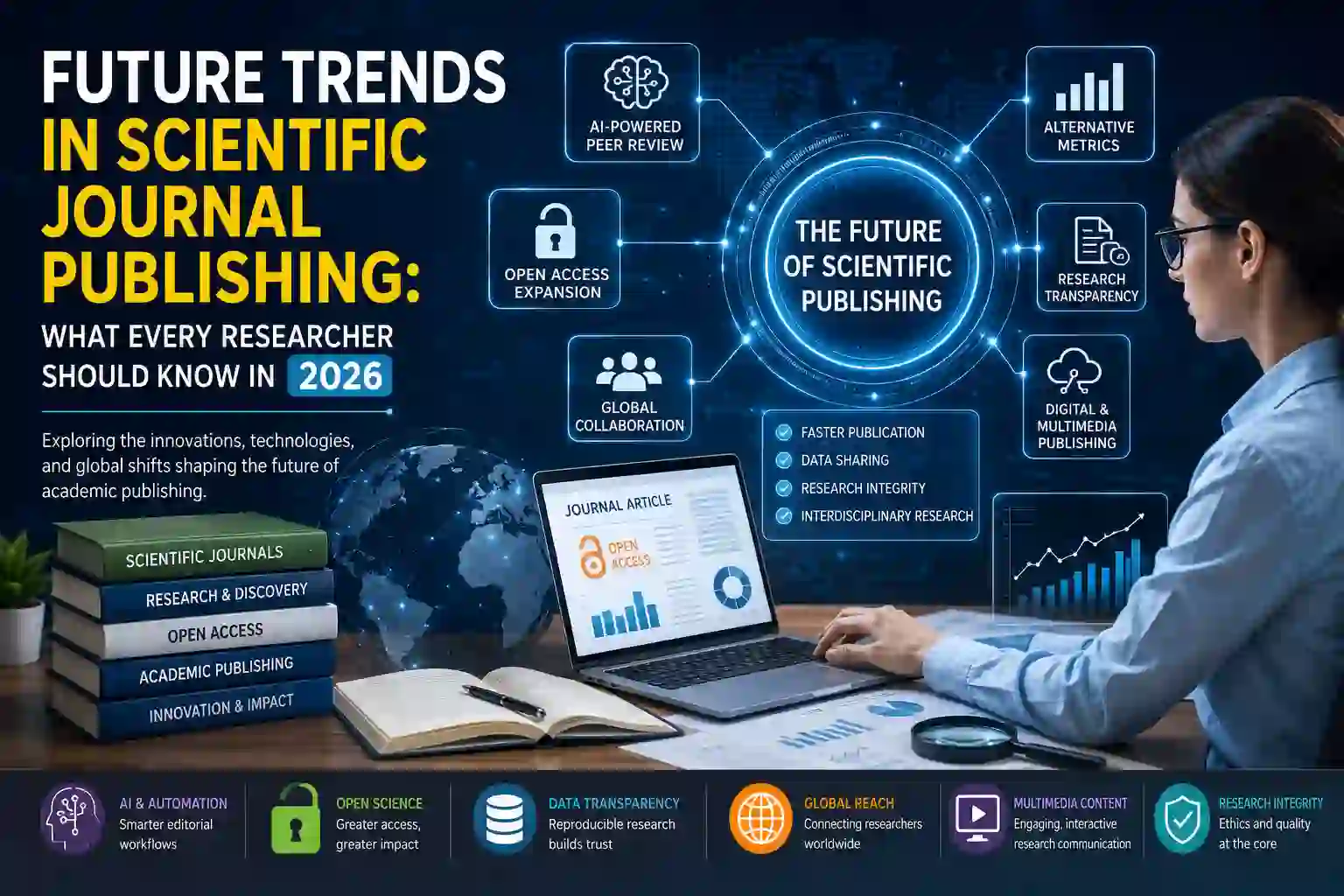
The world of scientific publishing is undergoing one of the most significant transformations in its history. Rapid advances in artificial intelligence, open-access policies, digital publishing technologies, and research transparency initiatives are reshaping how research is reviewed, published, discovered, and cited.
For researchers, understanding these changes is no longer optional. The publishing landscape of 2026 rewards authors who adapt to new technologies, embrace open science practices, and choose journals strategically.
This guide explores the most important future trends in scientific journal publishing and explains what every researcher should know to remain competitive in the evolving academic ecosystem.
Traditional publishing models are being challenged by several forces:
Modern journals are evolving from simple publication platforms into comprehensive research communication ecosystems. Researchers looking for publication opportunities can explore JRIST, a multidisciplinary journal supporting innovation across science and technology.
One of the biggest trends in 2026 is the integration of artificial intelligence into the peer-review process.
AI will not replace human reviewers entirely, but it will significantly increase the speed and rigor of manuscript screening.
Open-access publishing has moved from a niche model to a global standard in many disciplines.
Many funding agencies now require researchers to publish openly accessible results.
When selecting a journal, evaluate:
Journals increasingly require authors to provide:
This shift aims to improve reproducibility and trust in scientific findings.
Create organized data management workflows from the beginning of your research project.
Preprint servers allow researchers to share findings before formal peer review.
In 2026, many journals actively encourage or permit preprint submissions.
Traditional citation counts remain valuable, but alternative metrics are becoming increasingly influential.
Researchers are increasingly evaluated on broader research impact, not only journal-based metrics. To strengthen your scholarly profile, consider strategies discussed in Boost Your H-Index: Best Google Scholar Indexed CS Journals.
Scientific papers are evolving beyond static PDF documents.
These formats improve reader engagement and make complex research easier to understand.
Researchers increasingly expect quicker editorial decisions.
Many competitive journals now aim for initial decisions within weeks rather than months.
Publishers are investing heavily in integrity checks.
Maintaining strong ethical standards is becoming more important than ever.
Many major scientific challenges require expertise from multiple fields.
Journals that welcome interdisciplinary work are likely to gain influence in 2026. Researchers in engineering and technology fields may also find useful insights in Publishing Engineering Research Papers in Peer-Reviewed Journals.
Researchers are increasingly choosing journals based on multiple factors rather than impact factor alone.
| Factor | Why It Matters |
|---|---|
| Journal Scope | Audience relevance |
| Indexing | Visibility |
| Open Access | Accessibility |
| Review Time | Speed |
| Publication Fees | Affordability |
| Reputation | Credibility |
For a deeper understanding of journal evaluation, see Academic Peer Reviewed Journals: A Complete Author Guide.
Artificial intelligence is rapidly becoming an indispensable tool for researchers. From literature reviews and language editing to statistical analysis and reference management, AI-powered applications can save significant time. However, journals increasingly require authors to disclose the use of AI tools, particularly when they contribute to manuscript preparation.
Researchers who combine AI efficiency with critical scientific thinking will be better positioned for successful publication.
Funding agencies and publishers increasingly encourage—or require—authors to make their datasets publicly available. Open data improves transparency, reproducibility, and opportunities for collaboration.
Researchers should organize datasets from the beginning of their projects to simplify future publication.
Scientific research is becoming increasingly international. Collaborative projects involving universities, research institutions, and industries across multiple countries are now common.
International collaboration often results in:
Publishing in internationally recognized journals helps researchers reach a wider academic audience and strengthens professional networks.
Many journals are moving away from waiting for complete issues before releasing articles. Instead, accepted manuscripts are published online immediately after final production.
This trend is expected to become the standard publishing model for many scientific journals by 2026 and beyond.
Success in modern scientific publishing requires more than excellent research. Authors should continually develop complementary skills that improve both manuscript quality and research visibility.
| Skill | Importance |
|---|---|
| Scientific Writing | Clear communication of research findings |
| Research Ethics | Compliance with publication standards |
| Data Management | Supports transparency and reproducibility |
| AI Literacy | Efficient and ethical use of AI tools |
| Reference Management | Accurate citations and bibliography |
| Research Promotion | Improves visibility and citations |
To remain competitive in scientific publishing, researchers should adopt proactive strategies.
If you're preparing your manuscript, read Mastering Scientific Publishing: How to Write a Research Paper That Gets Published for practical writing and submission strategies.
Selecting an appropriate journal remains one of the most important decisions for any researcher. A well-matched journal improves the likelihood of acceptance and ensures your work reaches the intended audience.
Computer science researchers can explore Top Computer Science Journal Options for Publishing Research in 2026 to identify suitable publication venues.
Researchers seeking current submission opportunities across science and technology disciplines are encouraged to visit the JRIST Call for Papers page for upcoming issues and special editions.
The most significant trend is the integration of artificial intelligence into editorial workflows, alongside increasing adoption of open-access publishing and research transparency requirements.
No. AI assists editors by screening manuscripts and identifying potential issues, but human experts remain essential for evaluating scientific quality, originality, and significance.
Open-access journals improve research visibility, increase accessibility, and often lead to greater citation potential by allowing anyone to read published articles without subscription barriers.
Authors should choose journals that match their research scope, follow submission guidelines carefully, present original findings, maintain ethical standards, and respond constructively to reviewer feedback.
Traditional journals are evolving rather than disappearing. Many are adopting digital-first workflows, continuous publication models, and open-access options to meet changing researcher expectations.
The future of scientific journal publishing is being shaped by technological innovation, global collaboration, and a stronger commitment to transparency and research integrity. Artificial intelligence, open science, digital publishing platforms, alternative research metrics, and interdisciplinary collaboration are redefining how scientific knowledge is communicated.
Researchers who embrace these trends will be better prepared to publish impactful work, increase their scholarly visibility, and contribute meaningfully to the global research community.
Success in 2026 is no longer determined solely by producing excellent research—it also depends on understanding the evolving publishing ecosystem, selecting the right journal, adhering to ethical standards, and leveraging modern technologies responsibly.
Whether you are publishing your first paper or expanding an established research portfolio, staying informed about these emerging trends will help you navigate the future of academic publishing with confidence.
Ready to publish your next research paper? Visit Journal of Recent Innovation in Science and Technology (JRIST) to explore publication opportunities, author guidelines, and the latest calls for papers.
ISSN (Online): 3117-3926
ISSN (Print): 3117-535X
| Publication Fees: | |