ISSN (Online): 3117-3926
ISSN (Print): 3117-535X
| Publication Fees: |  |

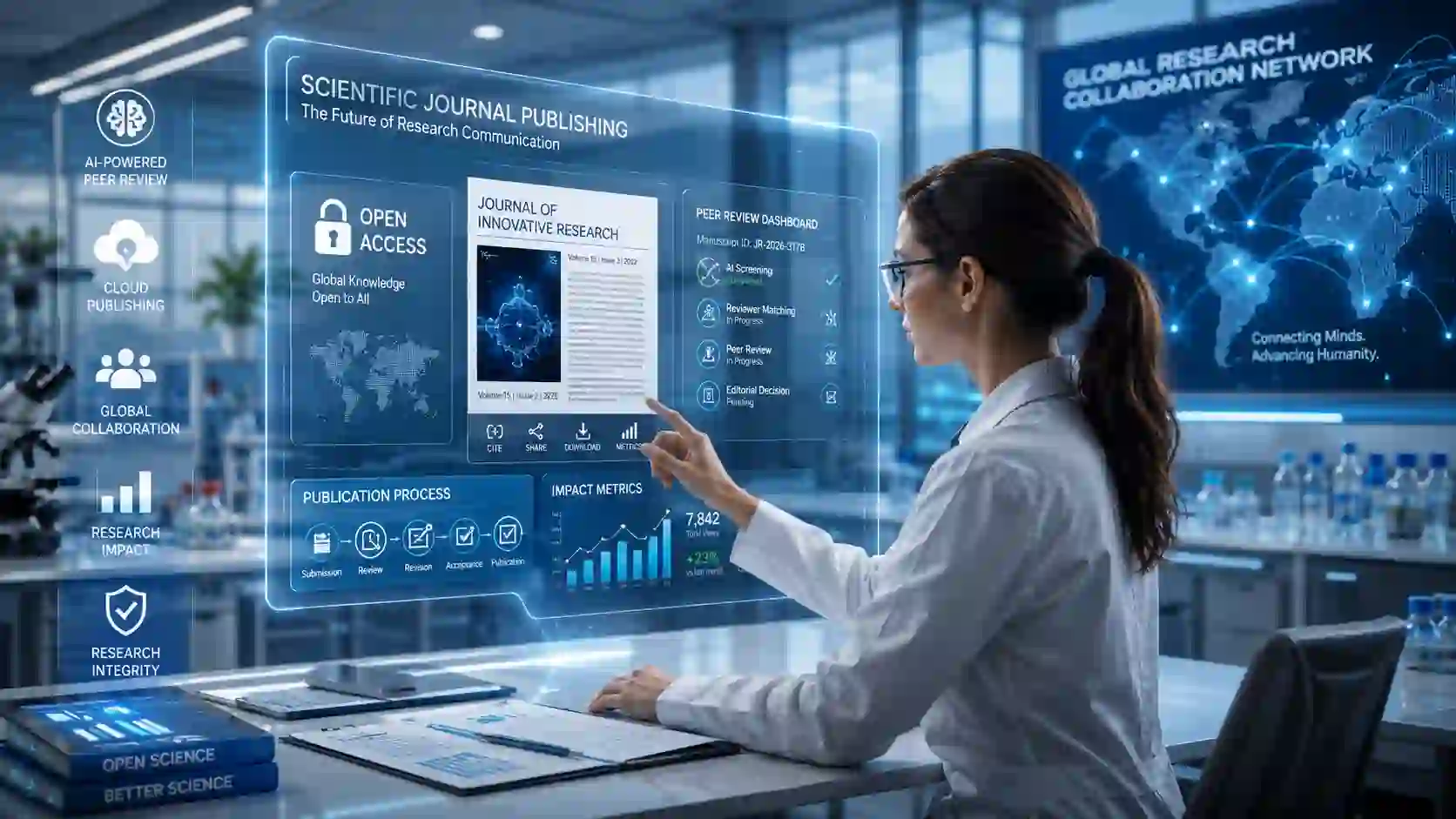
The landscape of scientific publishing is evolving faster than ever before. Artificial intelligence, open science initiatives, digital publishing platforms, and global collaboration are transforming how research is reviewed, published, and shared with the world. For researchers, staying informed about these trends is essential for increasing publication success and maximizing research impact.
This comprehensive guide explores the latest trends in scientific journal publishing in 2026 and explains how researchers can adapt to an increasingly digital and transparent publishing ecosystem.
Dr. Ananya Sharma had spent nearly three years developing a novel machine learning model for medical image analysis. After months of experiments, data validation, and manuscript revisions, she confidently submitted her research to a respected international journal.
She expected the traditional review process to take several months. Instead, within just a few days, the editorial office responded. Her manuscript had successfully passed an automated screening system that checked plagiarism, statistical consistency, image integrity, reference quality, and even language clarity before it reached human reviewers.
While the speed impressed her, the reviewer comments introduced another surprise. The journal requested a public data repository, a software code archive, an author contribution statement, and a declaration explaining how artificial intelligence tools had been used during manuscript preparation.
These requirements had not existed when she published her previous paper only a few years earlier.
Initially overwhelmed, Dr. Sharma quickly realized that scientific publishing had entered a new era. Journals were no longer evaluating research solely on scientific novelty—they were also assessing transparency, reproducibility, ethical compliance, digital accessibility, and research impact.
After carefully addressing every requirement, her article was accepted. Within weeks, researchers from multiple countries began citing her work because it was openly accessible, supported by reusable datasets, and promoted through modern scholarly communication channels.
Her experience reflects a growing reality for researchers worldwide. Publishing success in 2026 requires more than excellent research—it requires understanding the rapidly changing world of scientific journal publishing.
The traditional publishing model has served the academic community for decades. However, technological innovation, increasing research output, and evolving expectations from funding agencies have accelerated major changes across scholarly publishing.
Several driving forces are reshaping modern scientific journals:
Understanding these developments helps researchers prepare manuscripts that align with modern publishing standards.
Researchers seeking a multidisciplinary platform for publishing innovative research can explore Journal of Recent Innovation in Science and Technology (JRIST), which supports high-quality research across science, engineering, and technology.
Artificial intelligence has become one of the most influential technologies in academic publishing. Rather than replacing editors or reviewers, AI now assists them in making the publication process faster and more efficient.
Researchers should remember that AI enhances—but does not replace—human peer review. Scientific originality, methodology, and significance remain the responsibility of experienced reviewers and editors.
Open Access has evolved from an alternative publishing model into a mainstream approach adopted by universities, funding agencies, and research organizations worldwide.
| Traditional Publishing | Open Access Publishing |
|---|---|
| Subscription-based access | Free worldwide access |
| Limited readership | Global visibility |
| Institutional access required | Available to anyone |
| Often slower dissemination | Rapid sharing of research |
Editors increasingly expect authors to demonstrate complete transparency throughout the research lifecycle.
These practices improve reproducibility while strengthening confidence in published findings.
Scientific journals are increasingly adopting digital-first publication strategies.
Many publishers now release accepted manuscripts online immediately after production instead of waiting for complete journal issues.
Publishing is no longer simply about submitting a manuscript to the highest-impact journal. Authors must evaluate journal scope, editorial quality, indexing, publication ethics, review timelines, and accessibility.
Researchers preparing their manuscripts should first understand the complete publication process by reading Academic Peer Reviewed Journals: A Complete Author Guide.
For practical advice on preparing a publishable manuscript, explore Mastering Scientific Publishing: How to Write a Research Paper That Gets Published.
Today's global challenges require expertise from multiple scientific disciplines. Journals increasingly encourage interdisciplinary research that combines fields such as artificial intelligence, healthcare, environmental science, engineering, cybersecurity, biotechnology, and data science.
This shift provides researchers with new opportunities to collaborate across institutions and publish work that addresses complex real-world problems.
Engineering researchers can also benefit from reading Publishing Engineering Research Papers in Peer-Reviewed Journals for field-specific guidance.
Artificial intelligence tools have transformed how researchers prepare manuscripts. Today, AI-powered writing assistants can help improve grammar, summarize literature, organize references, and enhance readability. However, responsible use of these tools has become an important publishing requirement.
Leading publishers increasingly require authors to disclose how AI tools were used during manuscript preparation while confirming that authors remain fully responsible for the scientific accuracy of their work.
Many journals and funding agencies now encourage or require researchers to share datasets, source code, and supplementary materials. Open research data improves reproducibility, accelerates collaboration, and increases trust in published findings.
| Benefit | Impact on Research |
|---|---|
| Transparency | Builds confidence in research findings |
| Reproducibility | Allows independent validation |
| Collaboration | Encourages international research partnerships |
| Citation Potential | Shared datasets often receive additional citations |
| Funding Compliance | Meets sponsor and institutional requirements |
Traditional citation counts remain valuable, but researchers are increasingly evaluated using broader measures of research impact.
Researchers seeking to improve their long-term academic visibility should also focus on publishing in well-indexed journals. Learn more in Top Computer Science Journal Options for Publishing Research in 2026.
Researchers have long considered lengthy review times one of the biggest challenges in academic publishing. Modern editorial systems are reducing delays through automation and improved reviewer management.
| Traditional Workflow | Modern Digital Workflow |
|---|---|
| Manual reviewer selection | AI-assisted reviewer matching |
| Paper-based communication | Online editorial platforms |
| Long publication cycles | Continuous publication |
| Limited transparency | Real-time submission tracking |
Maintaining public trust in science requires strong ethical standards. As a result, publishers are investing heavily in technologies and editorial policies that detect misconduct before publication.
Researchers should always prioritize transparency, originality, and accurate reporting to maintain the integrity of scientific literature.
Research has become increasingly global. Collaborative projects involving multiple universities, industries, and research institutes often produce more impactful publications.
International collaboration offers several advantages:
Understanding publishing trends is only the first step. Researchers should actively develop publishing strategies that align with modern journal expectations.
For additional insights into how scientific publishing is evolving, read Future Trends in Scientific Journal Publishing: What Every Researcher Should Know in 2026.
Choosing the right journal remains one of the most important decisions in the publication process. Authors should evaluate factors such as journal scope, indexing, peer-review quality, publication timelines, and ethical standards.
If you are actively looking for publication opportunities, visit the JRIST Call for Papers to explore current submission opportunities across science, engineering, and technology disciplines.
| Earlier Publishing Model | Modern Publishing (2026) |
|---|---|
| Print-focused journals | Digital-first publication |
| Limited accessibility | Open-access availability |
| Long publication timelines | Continuous online publication |
| Basic peer review | AI-assisted editorial screening |
| Citation-focused evaluation | Broader research impact metrics |
| Minimal supplementary files | Datasets, code, video abstracts, and interactive content |
The latest trends include AI-assisted peer review, open-access publishing, research transparency, data sharing, continuous publication models, digital-first journals, interdisciplinary research, and alternative research impact metrics.
AI is helping journals automate plagiarism detection, reviewer selection, language assessment, statistical verification, image integrity checks, and editorial workflow management. However, final publication decisions continue to rely on expert editors and peer reviewers.
Open Access increases research visibility, improves accessibility for readers worldwide, supports compliance with funding agency requirements, and often leads to higher citation potential.
Research transparency involves openly sharing datasets, methodologies, funding information, author contributions, and ethical approvals so that research can be verified and reproduced by other scientists.
No. Preprints allow researchers to share findings quickly before peer review, while peer-reviewed journals remain the gold standard for validating scientific quality and credibility.
Consider the journal's scope, peer-review process, indexing status, publication timeline, editorial reputation, publication fees, and target audience before submitting your manuscript.
No. AI is designed to support editors by automating repetitive tasks, but experienced researchers remain essential for evaluating scientific originality, methodology, significance, and overall quality.
The scientific publishing ecosystem in 2026 is more dynamic than ever. Journals are adopting advanced technologies, streamlining editorial workflows, promoting open science, and placing greater emphasis on research integrity. These changes are creating new opportunities for researchers while also raising expectations for transparency, collaboration, and publication quality.
For authors, understanding these trends is essential. A well-prepared manuscript, supported by robust data, ethical research practices, and strategic journal selection, has a significantly higher chance of successful publication.
Researchers who continually update their publishing knowledge will not only improve their acceptance rates but also enhance the visibility and long-term impact of their scientific contributions.
The future of scientific journal publishing is no longer a distant concept—it is already shaping how research is conducted, evaluated, and communicated. Artificial intelligence, Open Access, research transparency, digital publishing platforms, and interdisciplinary collaboration are transforming scholarly communication at an unprecedented pace.
Rather than viewing these developments as challenges, researchers should embrace them as opportunities to produce more accessible, credible, and impactful research. Building strong scientific writing skills, following ethical publication practices, leveraging digital tools responsibly, and selecting appropriate journals will remain critical for long-term academic success.
Whether you are an early-career researcher preparing your first manuscript or an experienced academic aiming to increase your research impact, staying informed about publishing trends will help you navigate the evolving scholarly landscape with confidence.
To publish your next high-quality research paper in a multidisciplinary peer-reviewed journal, visit Journal of Recent Innovation in Science and Technology (JRIST). You can also explore the latest Call for Papers to find upcoming publication opportunities.
ISSN (Online): 3117-3926
ISSN (Print): 3117-535X
| Publication Fees: | |